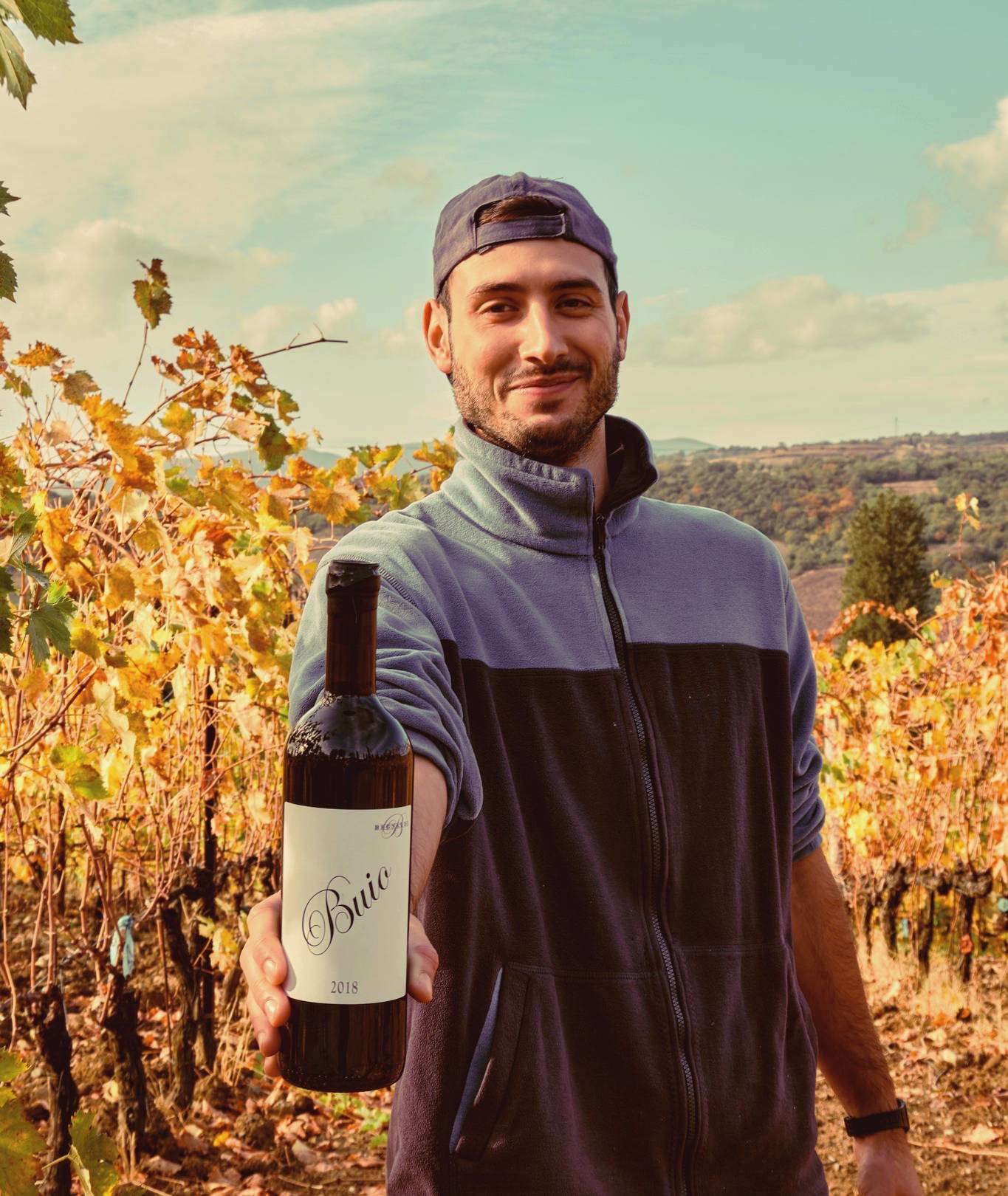
Buy Bardolino wine directly from the winemaker
Bardolino is the light, fragrant red wine from the eastern shore of Lake Garda, named after the town of Bardolino on the water. It is made from Corvina and Rondinella, the same grapes as in the Valpolicella, but the lake and the gravelly hills give a very different wine: bright, juicy and fresh, with cherry, raspberry and a touch of pepper. The same vineyards produce Chiaretto, the well known rosé of Lake Garda. On ONWINE you find Bardolino from winemakers such as Cottini Marco and Bigagnoli.
At ONWINE you buy Bardolino directly from the winemaker, with no importer in between. You put together a case of six bottles per winemaker and pay €8 shipping per case.
What is Bardolino wine?
Bardolino is a DOC in the Veneto, west of Verona. The vineyards lie on the moraine hills that glaciers left around the southern end of Lake Garda during the ice age: loose soils of gravel, pebbles and sand that drain well. The large lake acts as a heater in winter and a cooler in summer. Olive and lemon trees grow here, and the grapes ripen slowly while keeping fresh acidity. That explains why Bardolino is lighter in colour and alcohol than the wines from the hills further east.
Which grapes are used for Bardolino?
The main grape is Corvina, possibly with Corvinone, and it makes up most of the wine. Rondinella may account for up to 40 percent and adds colour and softness. Molinara, once widely used, may be added up to 15 percent. Corvina brings the typical cherry, the freshness and the slight bitter edge on the finish.
Bardolino DOC and Bardolino Classico
Basic Bardolino is a wine to enjoy young: pale red, with red cherry, strawberry, raspberry, clove and black pepper. The tannins are soft and the acidity lively, so it stays refreshing even in summer. Classico on the label means the grapes come from the historic heartland, the six communes of Bardolino, Garda, Lazise, Affi, Cavaion Veronese and Costermano. The Bardolino DOC from Cottini Marco is a fine example of this fresh, juicy style. View all Bardolino →
Bardolino Superiore DOCG
Since 2001 Bardolino Superiore has held the highest Italian quality tier, DOCG. The rules are stricter: lower yields, at least 12 percent alcohol and at least one year of ageing before release. A Superiore is therefore deeper in colour and fuller in flavour, with riper cherry, herbs and a little more structure, yet it stays elegant and fresh. Cottini Marco also makes a Bardolino Superiore DOCG. View the Superiore →
The crus of Bardolino: La Rocca, Montebaldo and Sommacampagna
Since the 2020 harvest Bardolino has had three official subzones, which winemakers and wine lovers call the crus. They show how varied the soils around the lake are. La Rocca lies in the heart of the Classico area, right above the lake, warm and sheltered. Montebaldo lies higher and further north at the foot of Monte Baldo, where cooler nights give fresh, spicy wines. Sommacampagna lies in the southern hills towards Verona, further from the water. Cru wines need at least one year of ageing. The 'Eocene' from Bigagnoli comes from the Montebaldo subzone. View the crus →
Chiaretto di Bardolino: the rosé of Lake Garda
Chiaretto roughly means the pale one. The winemaker leaves the juice on the skins of Corvina and Rondinella only briefly, sometimes just a few hours. This gives the wine a pale salmon pink colour and a fresh, dry character with raspberry, redcurrant, citrus and a salty touch. Chiaretto di Bardolino is one of the best known rosés of Italy and is often drunk in the spring after the harvest. There is also a sparkling Chiaretto Spumante. If you like light, dry rosé, also explore rosé wine from other regions. View the Chiaretto →
Bardolino or Valpolicella: the difference
Bardolino and Valpolicella are only a few kilometres apart and share their grapes. The difference lies in soil and climate. Around the lake the soils are lighter and the climate gentler, so Bardolino stays slimmer, paler and lower in alcohol. The Valpolicella sits higher on limestone and marl and gives fuller wines, right up to Amarone from dried grapes. For more power and concentration, choose Amarone della Valpolicella. To look further, explore all Italian red wines.
Serving and storing Bardolino
Bardolino is a red wine you serve lightly chilled, at 12 to 14 degrees. Feel free to put a bottle at room temperature in the fridge for half an hour. A Superiore or cru can be a little warmer, around 15 to 16 degrees, in a slightly larger glass. Serve Chiaretto well chilled at 8 to 10 degrees. Drink basic Bardolino and Chiaretto within two years of the harvest. A Superiore or cru can age for three to six years and becomes spicier.
What food goes with Bardolino?
Bardolino is one of the few red wines that also works with fish. Around the lake it is drunk with grilled freshwater fish and trout. It also suits salumi, pizza, pasta with tomato sauce, gnocchi, chicken and light meat dishes. A Superiore or cru can take mushroom risotto, veal and young cheeses. Chiaretto is a perfect aperitif and pairs with salads, grilled vegetables, sushi, shellfish and the Italian aperitivo.
Frequently asked questions about Bardolino
What is Bardolino wine?
Bardolino is a light, fresh red wine from the eastern shore of Lake Garda in the Veneto. It is made mainly from Corvina and Rondinella and tastes of cherry, raspberry and pepper, with soft tannins. There is a basic Bardolino DOC, a Bardolino Superiore DOCG, three crus and the rosé Chiaretto di Bardolino.
Which grapes are used for Bardolino?
Bardolino is made from Corvina, sometimes with Corvinone, as the main grape, plus up to 40 percent Rondinella. Molinara may be added up to 15 percent. These are the same grapes as in the Valpolicella, but the light moraine soils and the Lake Garda climate give a slimmer, fresher wine.
What is Chiaretto di Bardolino?
Chiaretto di Bardolino is the dry rosé of Lake Garda, made from Corvina and Rondinella. The juice spends only a short time on the skins, so the wine is pale pink and tastes fresh with raspberry, redcurrant, citrus and a salty touch. Drink it young and well chilled as an aperitif or with fish and salads.
What is the difference between Bardolino and Bardolino Superiore?
Bardolino Superiore has been a DOCG since 2001, with stricter rules than basic Bardolino DOC: lower yields, at least 12 percent alcohol and at least one year of ageing. It is therefore deeper in colour, fuller and spicier. Basic Bardolino is lighter and meant to be drunk young and fresh.
What are the crus of Bardolino?
Bardolino has three official subzones, the crus: La Rocca, Montebaldo and Sommacampagna, recognised since the 2020 harvest. La Rocca is warm and sheltered above the lake, Montebaldo higher at the foot of Monte Baldo and Sommacampagna in the southern hills towards Verona. Cru wines age for at least one year.
What is the difference between Bardolino and Valpolicella?
Bardolino and Valpolicella use the same grapes but grow on different soils. Bardolino comes from the light moraine hills by Lake Garda and is slimmer, paler and lower in alcohol. Valpolicella comes from higher limestone and marl hills and is fuller, with Ripasso and Amarone as its most powerful styles.
Should you chill Bardolino?
Yes, Bardolino is at its best lightly chilled, at 12 to 14 degrees. Put a bottle at room temperature in the fridge for half an hour. A Superiore or cru can be a little warmer, around 15 to 16 degrees. Serve Chiaretto, the rosé, well chilled at 8 to 10 degrees.
What food goes with Bardolino?
Bardolino suits salumi, pizza, pasta with tomato sauce, gnocchi, chicken and light meat dishes, and as one of the few reds it also works with grilled freshwater fish such as trout. A Superiore goes with mushroom risotto and veal. Chiaretto makes a lovely aperitif and pairs with salads, sushi and shellfish.
What does shipping cost?
You order a case of six bottles per winemaker, mixed as you like. Shipping is €8 per case and the wine comes straight from the winemaker to you.


 DOC
 Superiore
 Cru
 Chiaretto