Buying German wine: everything you need to know
Germany is the land of Riesling, but there is much more to discover. From the steep slate slopes of the Mosel to the warm, sunny Pfalz and the volcanic Kaiserstuhl in Baden, every region has its own style. At ONWINE you buy German wine directly from the family wineries and cooperatives that make it. No importer, no middlemen. So you know exactly where your wine comes from and who made it, and the winemaker gets a fair price.
On this page you'll find all the German wine available on ONWINE, from a fresh Kröver Nacktarsch for every day to a Riesling from a top vineyard for a special occasion. Below you can read how to choose the German wine that suits you.
Types of German wine: white, red, rosé and Sekt
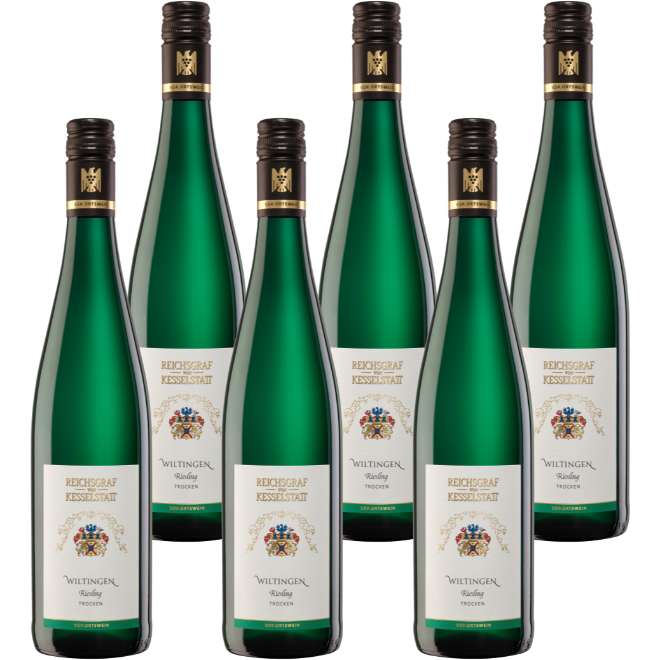
German white wine is what the country is famous for. Around two thirds of Germany's vineyards are planted with white grapes, led by Riesling. Grauburgunder, Weissburgunder, Müller-Thurgau and Silvaner are important too. Dry German white wine is fresh, juicy and often moderate in alcohol, like the Kröver Nacktarsch Trocken from Weingut Beth. View all German white wines.
German red wine keeps getting better and more popular. Spätburgunder, the German name for Pinot Noir, is the most important red grape. You'll also find dark, fruity Dornfelder, such as the Dornfelder Barrique Trocken, and Lemberger from Württemberg. View all German red wines.
German rosé is often called Weißherbst: a rosé made from a single red grape variety. Try the 'Meister:Werk' Spätburgunder Weißherbst Kabinett or the 'Affenflasche' Spätburgunder Rosé from Affentaler Winzer.
German sparkling wine is called Sekt. Winzersekt is made by the winemaker from their own grapes, with a second fermentation in the bottle. Taste the 'Beth's Classic' Riesling Sekt Trocken from the Mosel or the Pinot Sekt Brut from Weingut Ellwanger. Feeling adventurous? Try a PetNat such as the 'When Life Gives You Lemons' Riesling PetNat from Grandbois Weine.
The most important German wine regions
Germany has thirteen wine regions. They lie in the west and south of the country, mostly along rivers such as the Rhine, the Mosel and the Neckar.
Mosel is famous for its steep slate slopes along the river. Light, delicate Riesling with plenty of tension grows here, from bone dry to sweet. Weingut Beth in Kinheim and Weinhaus Hans Beth in Kröv make the well-known Kröver Nacktarsch. Weingut Maring-Prigge makes a Riesling Steillage Kabinett, among others.
Nahe is a small region along a tributary of the Rhine, with very varied soils. That gives Riesling with lots of nuance. Taste it at Weingut Hof Breitenstein and Weingut Keber Kolling.
Rheinhessen is Germany's largest wine region. A new generation of winemakers makes modern wines here, such as Burghof Oswald in Guntersblum and Weingut Jonas Kiefer in Worms.
Pfalz is warm and sunny, with the German Wine Route as its backbone. Around Forst, powerful Riesling grows on soils that include basalt. Discover Weingut Heinrich Spindler, Forster Winzerverein and the free-spirited Lichti & Astroh.
Baden is the southernmost and warmest region, and the home of the Pinot family. On the Kaiserstuhl, an extinct volcano, Bischoffinger Winzer make full-bodied Grauburgunder and Spätburgunder. Affentaler Winzer and Weingut Enderle und Moll are based in Baden too.
Württemberg makes more red than white wine. Along the Neckar, Lemberger, Trollinger and Spätburgunder thrive. Wein & Sektgut Hirschmüller, Weingut Ellwanger and Fürst Hohenlohe Oehringen show how versatile this region is.
Other well-known regions are the Rheingau (Riesling), Franken (Silvaner) and the Ahr (Spätburgunder).
German grapes
Riesling is the king of Germany: no country in the world grows more of it. It gives citrus, green apple and peach, with fresh acidity that helps the wine age well. From crisp and dry, like the Forster Ungeheuer Riesling Kabinett Trocken, to full and powerful, like the 'Ungeheuer Forst' Riesling Erste Lage. A rarity is Roter Riesling, a variant with reddish skins.
Spätburgunder is Pinot Noir. Germany is one of the largest Pinot Noir producers in the world. Expect cherry, strawberry and a soft structure, from juicy to elegant, like the Spätburgunder Enselberg Réserve or the Pinot Noir 'Buntsandstein'.
Grauburgunder is the same grape as Pinot Gris and Pinot Grigio. In Germany it is usually fuller and creamier than Italian Pinot Grigio. An older name is Ruländer. Try the Grauburgunder Trocken from Fürst Hohenlohe Oehringen or the Grauburgunder 'Skins', an orange wine from Enderle und Moll.
Weissburgunder is Pinot Blanc: soft, fresh and elegant, like the Weißer Burgunder Premium from Weingut Hof Breitenstein.
Germany also makes wine from Müller-Thurgau, also called Rivaner (Müller-Thurgau 'Müller'), Silvaner, Kerner and the aromatic Scheurebe ('Fräulein Scheu'). More and more you'll also find Sauvignon Blanc, Chardonnay, Gewürztraminer and Muskateller.
Dry or sweet: trocken, feinherb and lieblich
German wine labels often tell you how sweet the wine is. Here's how to read them:
- Trocken: dry. No more than 9 grams of residual sugar per litre, and only if the acidity is high enough.
- Halbtrocken: off-dry, with no more than 18 grams of residual sugar per litre.
- Feinherb: not a legal term, but usually just off-dry, similar to halbtrocken.
- Lieblich: medium sweet, with no more than 45 grams of residual sugar per litre.
- Süß: sweet, with more than 45 grams of residual sugar per litre.
Want to taste the difference yourself? Put the Kröver Nacktarsch Trocken, the Feinherb and the Süss from Weinhaus Hans Beth side by side.
Kabinett, Spätlese and Auslese: what do they mean?
Many of the best German wines are a Prädikatswein. The Prädikat tells you how ripe the grapes were at harvest, not how sweet the wine is. From light to rich:
- Kabinett: the lightest style, fresh and elegant.
- Spätlese: late harvest, with riper grapes and more body.
- Auslese: selected, very ripe bunches.
- Beerenauslese and Trockenbeerenauslese: hand-selected overripe or shrivelled berries. Rare, sweet wines.
- Eiswein: grapes harvested frozen on the vine, at a temperature of at least seven degrees below zero.
So a Spätlese can be dry or sweet. Compare the Neuweierer Mauerberg Riesling Spätlese Trocken with the sweet Beth's Riesling Spätlese Süss. If you love sweet wine, try a rich Riesling Auslese or a rare Riesling Eiswein.
VDP, Erste Lage and Grosses Gewächs
The VDP (Verband Deutscher Prädikatsweingüter) is an association of leading German wine estates. The VDP classifies wine by origin, much like Burgundy:
Estates outside the VDP also use terms such as Ortswein and Erste Lage, for example Weingut Heinrich Spindler with the 'Forster' Riesling Ortswein.
Which German wine goes with which dish?
- Asian food and mild spice: a Riesling feinherb or Kabinett.
- Fish, asparagus and salads: a dry Riesling, Weissburgunder or Silvaner.
- Poultry, pork and creamy pasta: a Grauburgunder.
- Game, duck and mushrooms: a Spätburgunder.
- Cheese and dessert: a Spätlese, Auslese or Eiswein.
- As an aperitif: a dry Sekt.
How do you choose a good German wine?
The best German wine is the one that suits your taste. If you enjoy Sauvignon Blanc or Chablis, start with a dry Riesling. If you love red Burgundy, choose a Spätburgunder. If you like Pinot Grigio, try a Grauburgunder. And if dry wine feels too austere, go for feinherb.
Still not sure? A tasting case is the easiest way to discover what you like. The Germany Tasting Case gives you a first introduction, the Riesling Tasting Case from Lichti & Astroh shows three styles of Riesling and the Weingut Beth Tasting Case lets you taste the Mosel. Looking for an exclusive German wine for a special occasion? Take a look at the Scharzhofberger Riesling Grosses Gewächs or the 'Ungeheuer Forst' Riesling Erste Lage.



 Mosel classic
 Under €15
 Spätburgunder
 Sekt


 Classic Riesling
 Erste Lage
 Pinot varieties
 Sekt and organic