

Alessia from ONWINE - 23 / Mar / 2026
Alta Langa: How This Sparkling Wine Is Conquering Europe
Alta Langa is the sparkling wine from Piedmont that is currently gaining the most momentum across Europe. But why is it becoming so well known? In this blog you will find out all the secret inside the Altalanga bubbles.
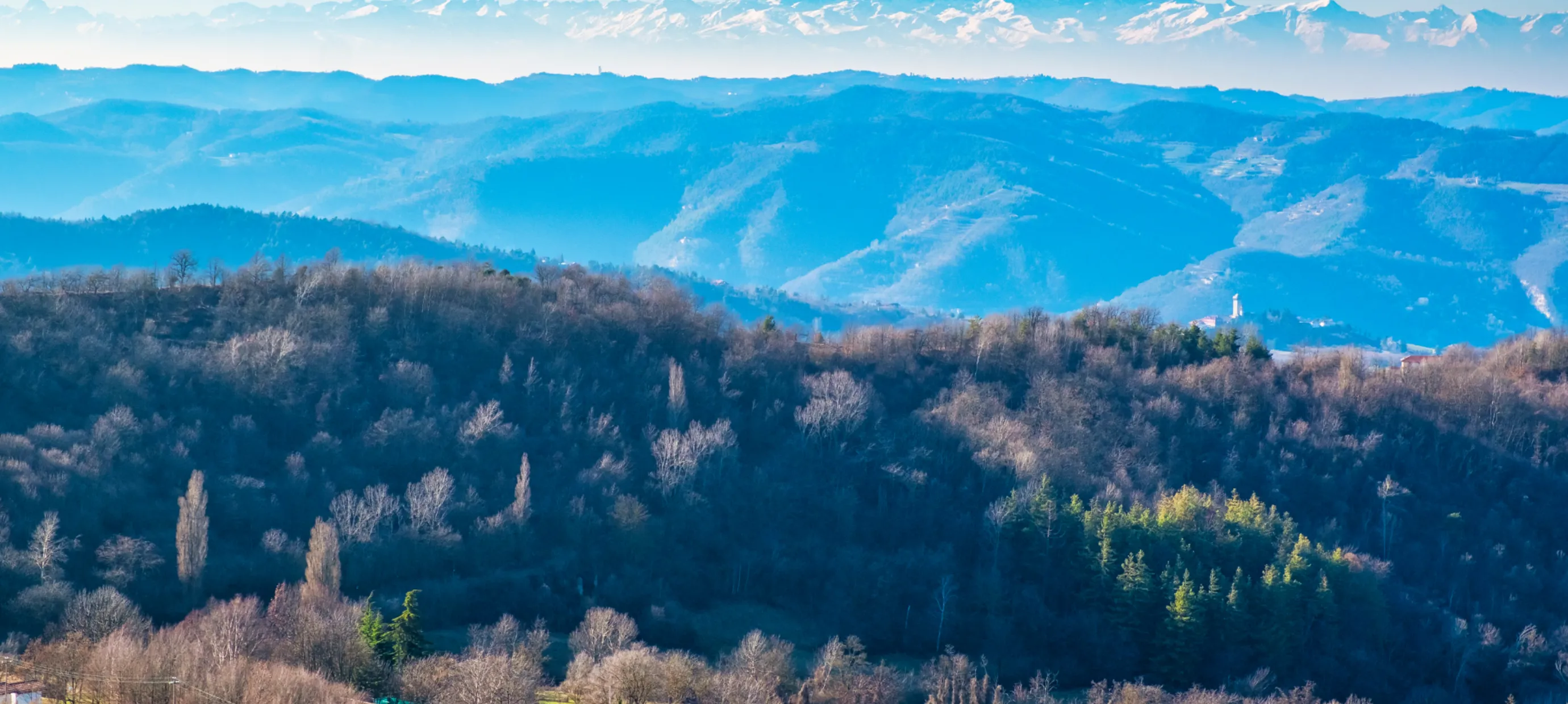
Alta Langa is the sparkling wine from Piedmont that is currently gaining the most momentum across Europe. But why is it becoming so well known?
In this blog you will find out all the secrets inside the Alta Langa bubbles.
The story of Alta Langa dates back to the 19th century. In fact, Piedmont was the first Italian region to produce sparkling wine using the traditional method (the same method used in Champagne). At the time, the region had the ideal conditions for developing a serious sparkling wine industry: strong economic resources, technical expertise, and a significant French cultural influence.
In fact, Piedmont has always had a strong cultural connection with France. Many Italian winemakers looked up to France to better understand winemaking processes and market trends. France had more history and development than Italy at the time, so many Italian winemakers started tasting French wines, traveling to the country, and using their winemaking methods, such as the use of barrique.
Champagne has always been one of the symbols of the wine world, so Italians were curious to understand how the classic method could be imported into their terroir to give another expression of the same grapes.
As with every great beginning, there were pioneers. Among them were Giovanni Boschiero and the Gancia brothers, who began experimenting with and promoting the cultivation of Pinot Noir in the areas of Asti and Canelli. They paved the way for many other producers.
In particular, Carlo Gancia travelled to France to learn the secrets of Champagne production. At the end of the 19th century, he opened his winery first near Turin and later in Canelli, in the Monferrato area. There, he helped define the identity of Italian sparkling wine. Today, the Fratelli Gancia winery is a reference point for the entire Italian sparkling wine movement.
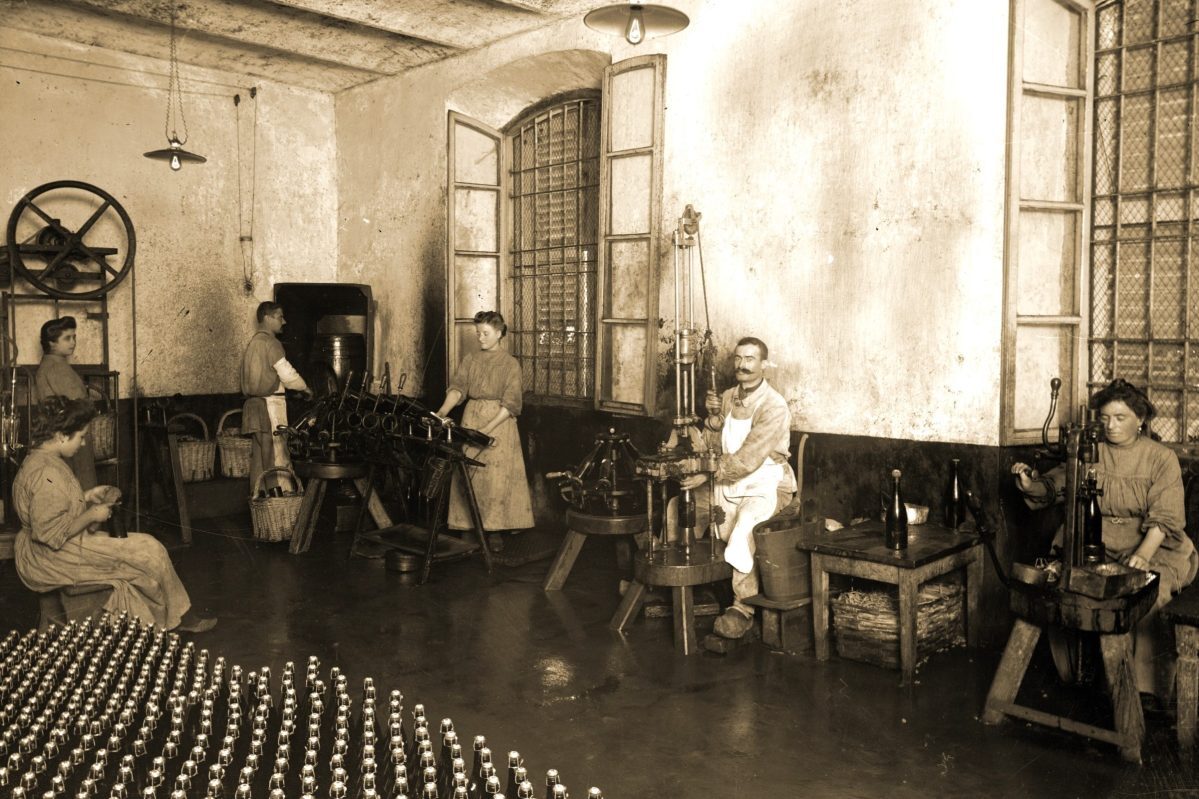 Carlo Gancia disgorgement
It is important to note that Alta Langa was not the first sparkling wine to receive DOCG status (Italy’s highest quality designation). That honour went to Asti DOCG in 1993 and later to Franciacorta DOCG in 1995.
The road to DOCG recognition for Alta Langa was long.
In the 1990s, people began speaking about the “Piedmont Sparkling Wine Project,” as the name Alta Langa did not yet exist. Only in 1998 was the name “Alta Langa” officially chosen for this traditional-method sparkling wine. The first celebratory toast took place in May 1999, DOC status followed in the early 2000s, and finally, in 2011, Alta Langa obtained DOCG recognition.
DOCG (Denominazione di Origine Controllata e Garantita) is the highest level of Italian wine classification. It guarantees origin, production rules, and strict quality standards.
It’s important to underline that DOCG wines do not necessarily mean higher quality than DOC or IGT denomination wines. The creation of DOCG is meant to protect a wine made in a specific region. It is a way to create a name so that it can be recognized as something singular and unique around the world.
The DOCG also has negative aspects: it has a cost; cellars have to pay to get the DOCG because a person has to come and make sure that the wines are made following the rules. After that, the process to get everything approved is long and very strict. That’s why many producers don’t have DOCG.
Secondly, once the cellars are inside a denomination, they have specific rules to follow that they can’t break; otherwise, they will lose the certification.
These criticisms do not apply to the Alta Langa case because it’s new to the market. In fact, the producers are still searching for their identity, and so the rules are not that strict—for now. But older DOCGs that were created 40 or 50 years ago are now old-fashioned, and winemakers can’t change the winemaking processes to adapt their wine to the market.
So it is very important to know the background of this kind of wine before judging it as high quality or not.
How Is Alta Langa Produced?
Alta Langa DOCG is unique in Italy because the denomination is dedicated exclusively to traditional-method sparkling wines.
Only two grape varieties are permitted: Pinot Nero (Pinot Noir in French) and Chardonnay. They can be vinified separately (100% of one grape) or blended. But only these two grapes are allowed; if a producer decides to use even 1% of another grape, they can’t call it Alta Langa.
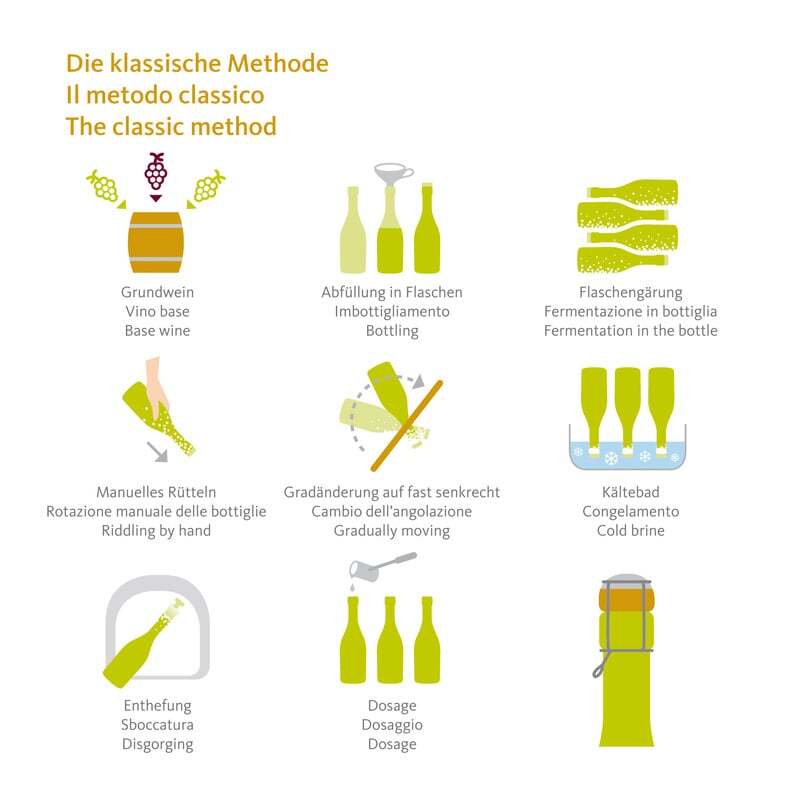
Production follows the traditional method, the same used in Champagne. After alcoholic fermentation, the wine is bottled with a small amount of yeast and sugar to start a second fermentation in the bottle. During this stage, the yeast transforms the sugar into alcohol and carbon dioxide. Because the bottle is sealed, the carbon dioxide cannot escape and dissolves into the wine, this is how the bubbles are naturally created.
The wine then ages on its lees (the spent yeast) for at least 30 months. This second ageing is essential: it gives Alta Langa more complexity, texture, and elegance, as well as those subtle notes of bread crust and nuts typical of high-quality traditional-method sparkling wines.
At the end of ageing, the yeast sediment is removed (a step called disgorgement). Depending on how much sugar is added afterwards, the wine can be labelled Brut, Extra Brut, or Pas Dosé (no added sugar).
The result is an elegant, structured, and balanced sparkling wine.
Alta Langa is always vintage-dated (millesimato), meaning it comes from a single harvest year, and the vintage must appear on the label.
This choice is made to really taste that wine in that specific year. In fact, the taste of a wine changes every year for many reasons; the most important is the weather. Wines without this specification are made using remaining wine of old vintages in order to make them taste the same every year. With Alta Langa this is not possible. Every year will taste different, allowing you to really get to the soul of that harvest, ageing, and bubbles.
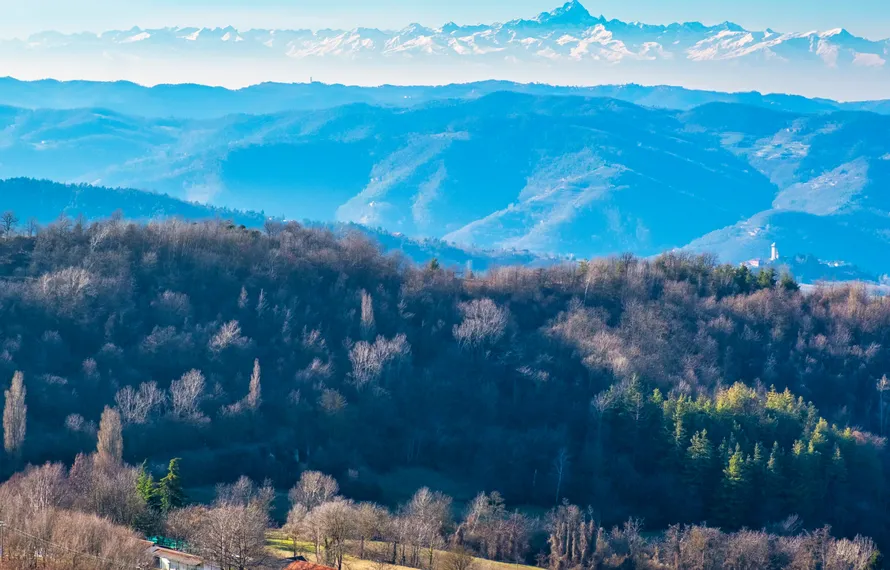
The vineyards are located at elevations above 250 meters in the provinces of Alessandria, Asti, and Cuneo, in southern Piedmont. This is a hilly, rural landscape where viticulture has deep historical roots and where modern production respects traditional practices.
Today, production exceeds 3.5 million bottles, with around one hundred producers involved. This amount may sound very big, but in Italy the Franciacorta region produces 19 million bottles and Champagne produces 271 million bottles per year. So it is actually very low, but still growing!
The Growth of Alta Langa
2025 was a great year for Alta Langa DOCG: sales and visibility grew a lot. The biggest Italian wine blogs spoke about this new trend with both positive and negative opinions.
We saw Alta Langa producers as leading actors of the wine scene in 2025, with a +10% increase in sales. In a wine world where there is too much wine and sales are decreasing, this is a very promising result!
But sales are not the only thing growing—also the number of producers and hectares used to create Alta Langa are increasing. In fact, they expect 2026 to be as good or even better than 2025. The consortium (consorzio in Italian), a group of all the producers of Alta Langa, has already participated in some important fairs to promote this incredible wine that is slowly becoming a symbol of the Piedmontese and Italian high-quality sparkling community.
The 2025 harvest was considered to be of excellent quality. Vineyard surface has reached 500 hectares, the Consorzio now counts 179 members, and sales have surpassed 2 million bottles. These figures reflect structured and consistent growth, no longer driven only by curiosity but by genuine market demand.
Today’s consumers are increasingly looking for authenticity, clear territorial identity, and wines with a strong sense of place. Alta Langa meets these expectations thanks to its mandatory vintage declaration and extended lees ageing, both of which reinforce its premium positioning.
The Controversy Against Alta Langa
Some leading Italian wine magazines have pointed out that Alta Langa has not yet achieved complete stylistic uniformity. On the market, there can be noticeable differences between wines produced by different wineries within the denomination.
The DOCG appellation is meant to protect a style of wine you can only find in a certain part of the world, because of its terroir, winemaking method, and especially the history of generations of winemakers who believed from the very beginning that their region could produce high-quality wines.
In fact, this criticism does not concern quality. On the contrary, commentators consistently highlight the great potential of the area. The discussion instead focuses on stylistic identity, image, and production philosophy. A DOCG is meant to protect a defined style and shared characteristics, but in some cases, these are not yet fully aligned, which may give the impression of a trend-driven wine rather than a fully consolidated category.
It should also be remembered that Alta Langa DOCG is relatively young. With just over 15 years of DOCG status, this means roughly 15 harvests and only a limited number of vintages available on the market. In recent years, many new producers have invested in Alta Langa, and it is therefore understandable that a clearly recognizable and unified stylistic identity is still evolving.
The area is often compared to Champagne or Franciacorta, both of which have had much longer to establish their market presence and stylistic consistency. Comparing 15 years of Alta Langa DOCG with almost 90 years of Champagne’s appellation status (1936) or 30 years of Franciacorta DOCG (1995) can be misleading. Building identity takes time, and it is something the Consorzio and producers are actively working on. So we will probably witness something incredible: the evolution of a high-quality winemaking area. In fact, it is extremely difficult to obtain a DOCG in Italy, considering that the first producers to really believe in Alta Langa started more than 130 years ago and only received the highest quality reward in 2011.
We are going to see and taste the very beginning of Alta Langa wines and the evolution of the winemaking style.
The Pas Dosé Choice
One stylistic choice seems to be taken by most Piedmontese producers: the Pas Dosé dosage.
After disgorgement, a small amount of sugar can be added to balance the wine. Brut contains less than 12 grams per liter of residual sugar, Extra Brut between 0 and 6 grams, and Pas Dosé contains little to no added sugar.
Many Alta Langa producers are increasingly choosing Pas Dosé. This can be seen as a bold move, especially since some international markets traditionally prefer slightly softer or sweeter styles.
However, the Pas Dosé version of Alta Langa highlights the denomination’s distinctive traits: vibrant freshness, pronounced minerality, and a firm, almost rocky character. These characteristics can be less evident when sugar is added.
Is this a forward-looking strategy or a risky, counter-trend choice? Only time will tell. What is certain is that reflecting the territory authentically in the glass is the primary goal of the denomination, and this stylistic direction may ultimately prove to be a winning one.
A Taste of Alta Langa
It is time to discover Alta Langa wine in its unique characteristics.
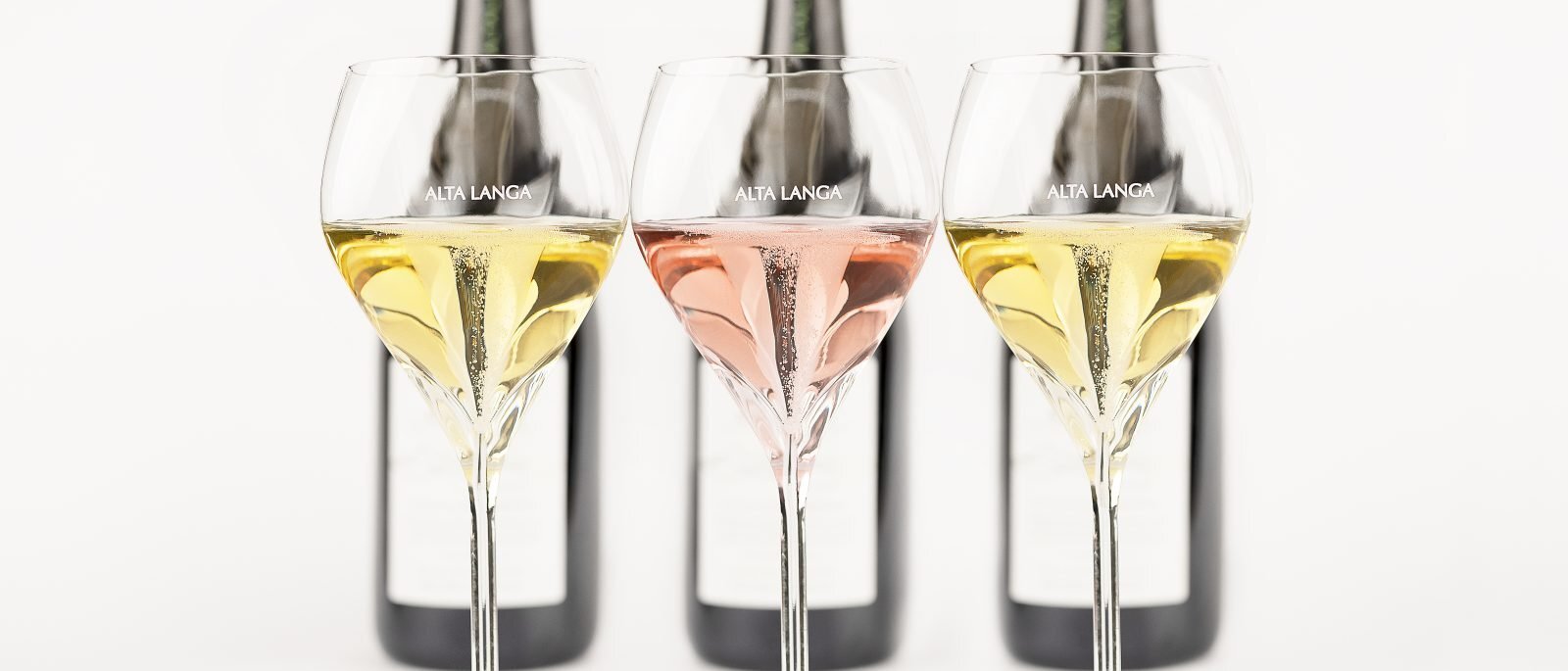
The wine is known especially for its bubbles: thin and numerous, organized in a continuous little chain. This is a way to understand the quality of a sparkling wine—the bubbles. The color can vary from a light yellow, when the wine is young, to a stronger golden yellow that indicates its maturity.
On the nose it is very expressive: flowers such as linden and jasmine, typical of the area where the grapes grow, and then fresh fruit such as white peach and apple. Notes of dried fruit come last together with bakery, butter, and dairy notes; these are the notes created during ageing, at least 30 months on the yeast.
The rosé version has more fig, roses, cacao, and spicy notes.
In the mouth we can feel the acidity that makes this wine very drinkable. The fruit is still present and, with the thin pelage, creates a nice combination of creaminess and freshness.
The most important and unique note that can really describe Alta Langa is the minerality, the saltiness that makes all the flavors more vibrant. Thanks to the Piedmontese terroir, the great altitudes, and especially the soil, this wine reaches a very high quality range.
The grapes used can be Chardonnay or Pinot Nero. The second one is the favorite of winemakers because it gives more structure and character to the wine; it can age more and develop more complex flavors while still being elegant, becoming a good wine to pair with various dishes such as vitello tonnato, full and aromatic, which needs a wine to wash it out. In fact, the bubbles prepare the mouth for another bite.
We can also pair it with smoked fish; the aromatic part and the fatness are balanced with Alta Langa.
The Chardonnay version (100%) is less chosen by winemakers because it has less structure but more freshness, while maintaining the symbolic minerality of Alta Langa. It is more drinkable and very good even when young. It is perfect paired with agnolotti al plin with butter, sage, and rabbit. The saltiness cuts the fat of the dish, creating harmony in the mouth.
Another perfect example is the croque monsieur, a French toast with cheese that balances very well with a vertical and mineral wine such as Alta Langa.
The rosé Alta Langa is perfect for tajarin (an Italian type of pasta, freshly made with egg) with ragù; rosé keeps a little more structure than the white versions of Alta Langa.
Another choice is a fish soup with aromatic herbs; the bubbles and the structure, once again, bring freshness to the palate to balance the strong flavors of the fish.
It’s important to underline the ageing potential of Alta Langa. This wine can age very well: from 5–8 years for Alta Langa aged 36 months, up to 10–12 years for Alta Langa aged 40–60 months on the lees.
Alta Langa is flexible: it can be very good young, with more freshness and fruity scents, and also old, with higher complexity both on the nose and in the mouth.
ONWINE and Alta Langa: Different Countries but the Same Goal: Bringing Quality to Life
ONWINE focuses on small producers to give them the possibility to make their wines known also in northern Europe. Alta Langa is the perfect example of a denomination that is still small and young but with high potential for growth. For that reason, we can say that ONWINE and Alta Langa are a match made in heaven!
With ONWINE you can order Alta Langa wines directly from the winemaker
- Alta Langa Metodo Classico Extra Brut – Diego Pressenda
This wine comes from the family winery of Diego Pressenda, located in the hills of Monforte d’Alba in the heart of the Langhe. The vineyards lie between about 450 and 1000 meters above sea level, which helps maintain freshness and acidity in the grapes. Made with 100% Pinot Noir grapes with an Extra Brut dosage, it shows citrus, white flowers, and light pastry notes from ageing on the lees. The Pinot Noir gives structure and good ageing potential to this wine. - Alta Langa Rosé DOCG – Torelli
This rosé is another interpretation of Alta Langa sparkling wine, made only from Pinot Noir grapes but vinified to obtain a pink color. Compared with the other wines, it focuses more on fresh fruit aromas such as strawberry and raspberry, while still developing light brioche notes during ageing on the lees. Rosé Alta Langa wines are often produced in hillside vineyards between 400 and 700 meters, where cooler temperatures help preserve aromatic intensity. The style is usually more approachable and expressive, making it a very versatile sparkling wine. - Le Bolle di Ariel Blanc de Noirs Alta Langa DOCG – Poggio
This wine is a Blanc de Noirs, meaning it is made entirely from Pinot Noir, even though the wine itself is white. The difference between this one and the first one is the dosage: this one is Pas Dosé, which means no sugar is added. This gives the wine a very dry and precise style with mineral notes and hints of citrus and toasted bread from ageing. This wine represents the new wave of Alta Langa production: zero dosage. - “Avremo” – Mauro Sebaste
This wine represents a slightly different style because it blends Pinot Noir (70%) with Chardonnay (30%), giving the wine more balance and creaminess. The vineyards are located in the high hills of Alta Langa, where cooler conditions allow long ripening and contribute to aromas of green apple, citrus, hazelnut, and biscuit after ageing on the lees. The dosage is usually moderate, making the wine structured but still elegant. The name itself, Avremo (“we will have” in Italian), suggests a forward-looking philosophy, highlighting the idea of future potential and the evolving identity of Alta Langa sparkling wines.