Buy Roero Arneis and Arneis wine directly from the winemaker
Arneis is the most important white grape of Piedmont and the pride of the Roero, the hills north of Alba. The wine is fragrant and soft, with pear, white peach, chamomile and white flowers, often finishing with a slightly bitter note of almond or hazelnut. While Piedmont is best known for red Barolo and Barbaresco, Arneis is the white wine the region drinks itself. On this page you will find Langhe Arneis and Roero Arneis from winemakers such as Canonica, Francone, Battaglino, Agnelli Viassone and La Trava.
At ONWINE you buy Arneis directly from the winemaker, with no importer in between. You put together a case of six bottles per winemaker and pay €8 shipping per case.
The Arneis grape: Piedmont's little rascal
The name Arneis comes from Piedmontese dialect and means something like little rascal or difficult fellow. That suits the grape: Arneis is prone to disease, gives irregular yields and quickly loses its acidity if it hangs too long. Winemakers have to pick at exactly the right moment.
For a long time Arneis was mostly planted among the Nebbiolo vines. Because it ripens earlier and is sweeter, it lured birds and wasps away from the precious red grapes. Its grapes often went into a sweet wine, and it was also known as Nebbiolo Bianco. By the 1960s Arneis had almost disappeared, until a few winemakers in the Roero started making serious dry white wine from it again. Since then it has become the best known white grape of Piedmont.
Roero Arneis DOCG
The Roero: sand, limestone and steep rocche
The Roero lies on the left bank of the Tanaro river, opposite the Langhe. The soils here are younger and lighter than across the river: sandy, with limestone and clay, and cut through by the rocche, steep eroded cliffs and ravines. These loose sandy soils give Arneis its delicate perfume and a taut, mineral finish. On heavier, more calcareous sites the wine becomes fuller and deeper.
The rules
Roero Arneis has been a DOCG since 2004. The wine must contain at least 95 percent Arneis, and in practice it is almost always 100 percent. The label may also carry one of the official village or vineyard names, the menzioni geografiche aggiuntive, which tells you which hill the wine comes from. A Roero Arneis such as the one from Francone has more tension and minerality than a typical Langhe Arneis. View all Roero Arneis →
Roero wine: white and red
Search for Roero wine and you will find two wines. Roero Arneis is white. Roero without any addition is red and made from Nebbiolo, lighter and more perfumed than Barolo or Barbaresco from across the Tanaro.
Langhe Arneis DOC
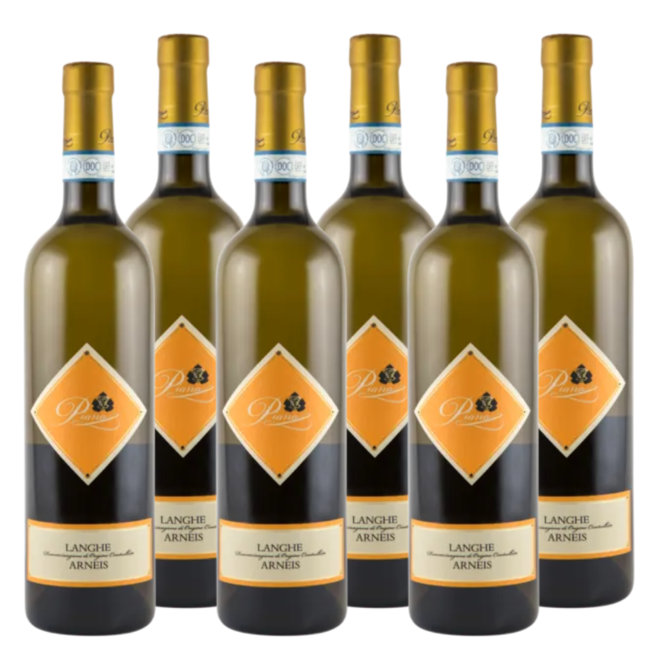
Langhe DOC is the broader appellation covering much of the wine country around Alba, including the Roero. A Langhe Arneis can therefore come from either bank of the Tanaro. It is often the fresher, more approachable style: juicy, with pear, apple and white flowers, made to drink young. The Langhe Arneis from Canonica is a fine example. An ideal wine for an aperitif or a summer lunch. View all Langhe Arneis →
Roero Arneis Riserva and sparkling Arneis
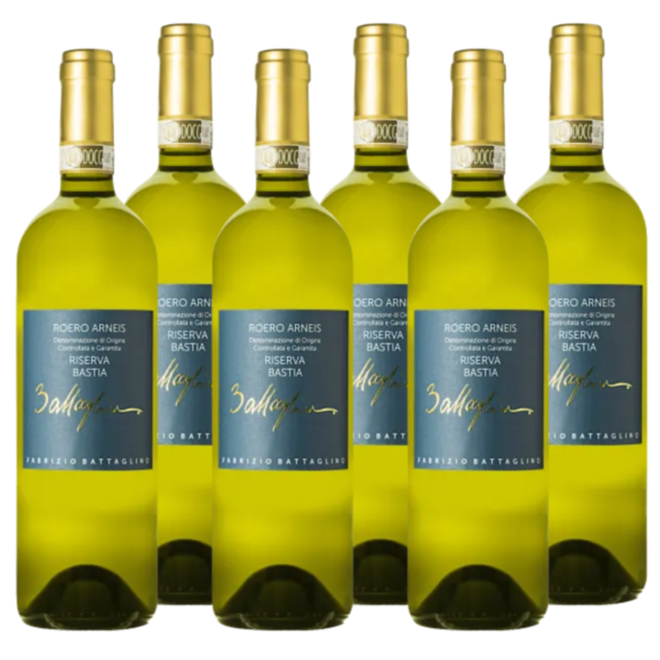
A Roero Arneis Riserva must age at least sixteen months before release. Winemakers use their best plots for it and often leave the wine on its fine lees for a long time. The result is fuller and more layered, with yellow fruit, honey, herbs and a longer finish, as in the 'Bastia' from Battaglino. A Riserva can age gracefully for five years or more. View the Riserva →
There is also Roero Arneis Spumante, usually made by the tank method, and in small quantities a sweet passito from dried Arneis grapes. These styles are rare, but show how versatile the grape is.
Arneis compared with other Piedmont white wines
Arneis is softer and more fragrant than Cortese, the grape of Gavi, which is crisper and more acidic. Compared with Timorasso from the Colli Tortonesi, Arneis is lighter and ready sooner: Timorasso is fuller, more mineral and can age for a long time. Outside Piedmont, Arneis is closest to a fragrant Vermentino or a ripe Pinot Grigio, but with more spice and that typical bitter twist.
To taste the differences yourself, put a Langhe Arneis next to a Roero Arneis and a Riserva. Three glasses show you what soil and ageing do. Also explore all Italian white wines or taste Arneis alongside other white grapes in the Piedmont White Tasting Case.
Serving and storing Arneis
Serve Arneis at 9 to 11°C in a medium sized white wine glass; too cold and it loses its perfume. A Langhe Arneis is best within two years of the harvest, when its fruit is at its brightest. A Roero Arneis stays lovely for three to four years, and a Riserva often longer. Store bottles on their side somewhere cool and dark.
What food goes with Arneis?
Arneis is a delightful aperitif wine and pairs well with Piedmontese cooking. Think vitello tonnato, carne cruda, stuffed courgette flowers, risotto, fresh pasta with butter and sage, and freshwater fish. It also works with sushi, chicken, vegetable dishes and soft goat's cheese. A Riserva can take on poultry, veal, mushroom risotto or white truffle from Alba.
Frequently asked questions about Arneis
What is Roero Arneis?
Roero Arneis is a dry white DOCG wine from the Roero, the hills on the left bank of the Tanaro near Alba in Piedmont. It contains at least 95 percent Arneis. Thanks to the sandy, calcareous soils it is fragrant and mineral, with pear, white peach, chamomile and a light bitter almond note.
What kind of wine is Arneis?
Arneis is a dry, aromatic white wine from Piedmont with a soft, round taste. You get pear, white peach, apple, white flowers and chamomile, with a slightly bitter note of almond or hazelnut on the finish. Its acidity is gentle, which makes it very approachable. It is sold as Langhe Arneis or Roero Arneis.
What is the difference between Langhe and Roero Arneis?
Roero Arneis is DOCG and comes only from the Roero, with its sandy, calcareous hills. It has more minerality, tension and length. Langhe Arneis is DOC and may come from the wider Langhe area, including the Roero. It is often fresher, fruitier and made to drink young. Both are made from the Arneis grape.
What is the Arneis grape?
Arneis is a white grape grown almost only in Piedmont, mainly in the Roero and the Langhe. In Piedmontese dialect the name means something like little rascal, because the vine is tricky in the vineyard. It used to be planted among the Nebbiolo to distract birds. By the 1960s it had almost disappeared.
What is Roero wine?
Roero is a DOCG wine area on the left bank of the Tanaro, opposite the Langhe near Alba. It produces two wines: the white Roero Arneis and the red Roero, made from Nebbiolo. Thanks to the sandy soils of the area, red Roero is lighter and more perfumed than Barolo and Barbaresco.
What is a Roero Arneis Riserva?
A Roero Arneis Riserva must age at least sixteen months before it can be sold. Winemakers use their best plots for it and often leave the wine on its fine lees for a long time. As a result it is fuller and more layered than a standard Roero Arneis, with yellow fruit, honey and herbs, and it can age for years.
Can you age Arneis?
Arneis is usually drunk young. A Langhe Arneis is best within two years of the harvest, while its fruit is freshest. A Roero Arneis stays lovely for three to four years, and a Riserva often five years or more. Store bottles on their side somewhere cool and dark, and serve them at 9 to 11°C.
What goes with Arneis?
Arneis is a delightful aperitif and pairs with Piedmontese antipasti such as vitello tonnato and carne cruda. It also suits risotto, fresh pasta with butter and sage, freshwater fish, sushi, chicken and soft goat's cheese. A Riserva can take on poultry, veal, mushroom risotto or white truffle. Serve it at 9 to 11°C.
What does shipping cost?
You order a case of six bottles per winemaker, mixed as you like. Shipping is €8 per case and the wine comes straight from the winemaker to you.



 Fresh
 Langhe DOC
 DOCG
 Riserva