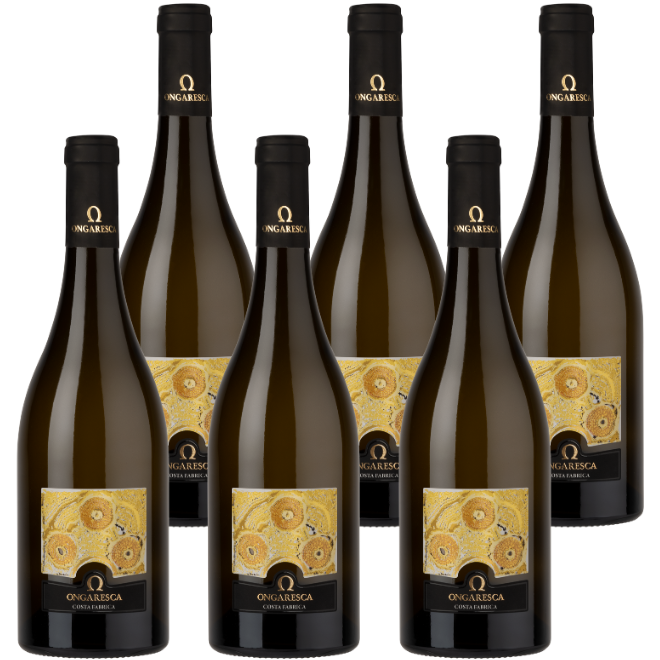
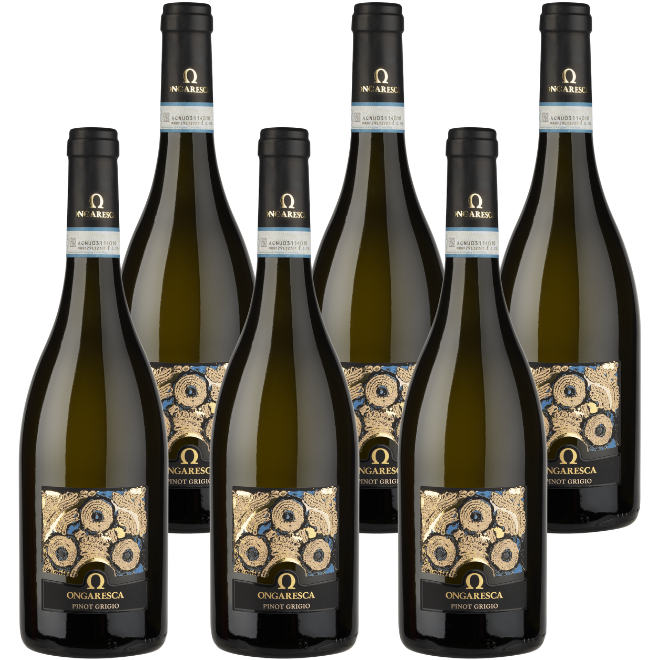
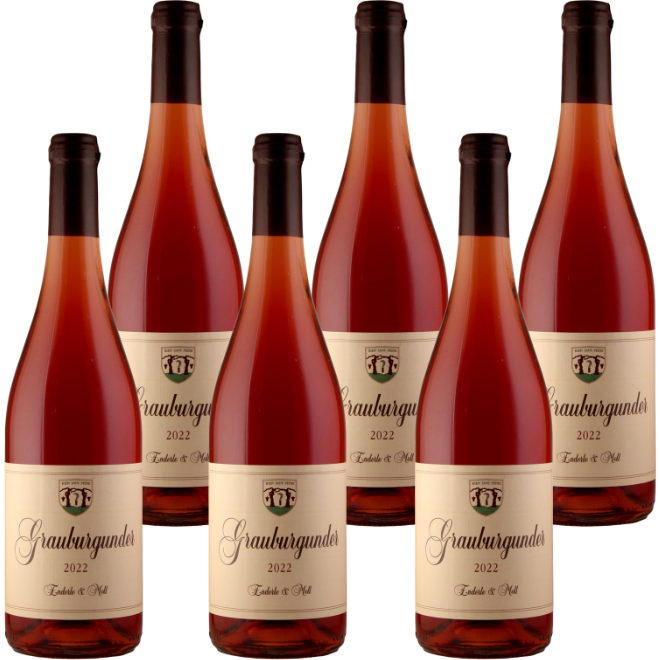
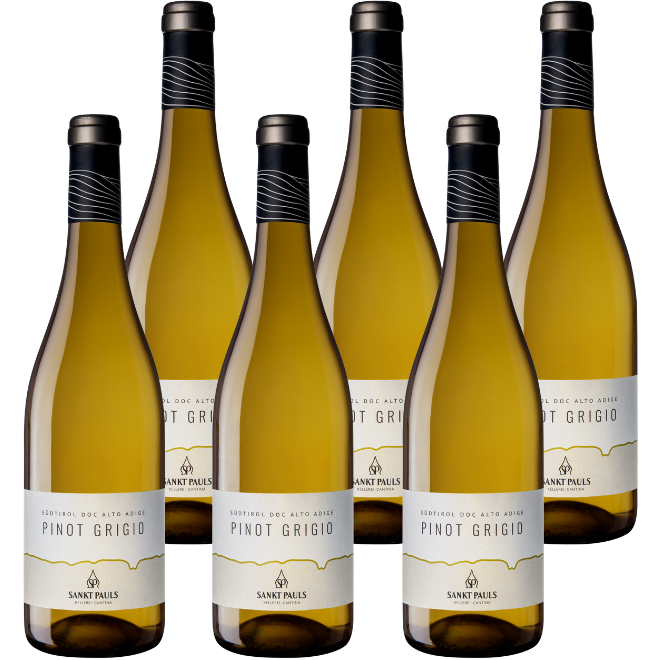
Buy Pinot Grigio wine directly from the winemaker
Pinot Grigio is one of Europe's most popular white wines. The grape has a greyish pink skin, hence the name: grigio is Italian for grey, gris French and grau German. It is the same grape everywhere, but Italy, Germany and Alsace each make their own style: from light and crisp to full and spicy.
At ONWINE you buy Pinot Grigio directly from the winemaker, with no importer in between. You put together a case of six bottles per winemaker and pay €8 shipping per case.
Pinot Grigio origin: what is Pinot Grigio?
Pinot Grigio is a colour mutation of Pinot Noir. It originally comes from Burgundy and spread from there across Europe. The bunches look like Pinot Noir, but the berries are greyish blue to pink. Despite that coloured skin it makes white wine, because the juice is colourless. Leave the juice on the skins and the wine turns copper coloured.
The grape ripens early and builds up sugar easily. Picked early, the wine is light and fresh. Picked late, it becomes fuller, riper and spicier. That choice explains the big differences in style between countries.
In Veneto and Trentino you will also find sparkling Pinot Grigio, usually brut: fresh, light and a fine aperitif. Its key characteristics stay the same in every style: soft acidity, pear and almond, and a smooth texture.
Is Pinot Grigio dry?
Almost always. Italian Pinot Grigio and German Grauburgunder are nearly always made dry, with little or no residual sugar. Dry Pinot Grigio is fresh and soft at once, with pear, lemon, white flowers and a hint of almond. Because its acidity is gentler than Sauvignon Blanc or Riesling, it tastes approachable and round. Only in Alsace will you also find off-dry Pinot Gris and sweet Vendanges Tardives.
Pinot Grigio, Grauburgunder or Pinot Gris?
Italian Pinot Grigio
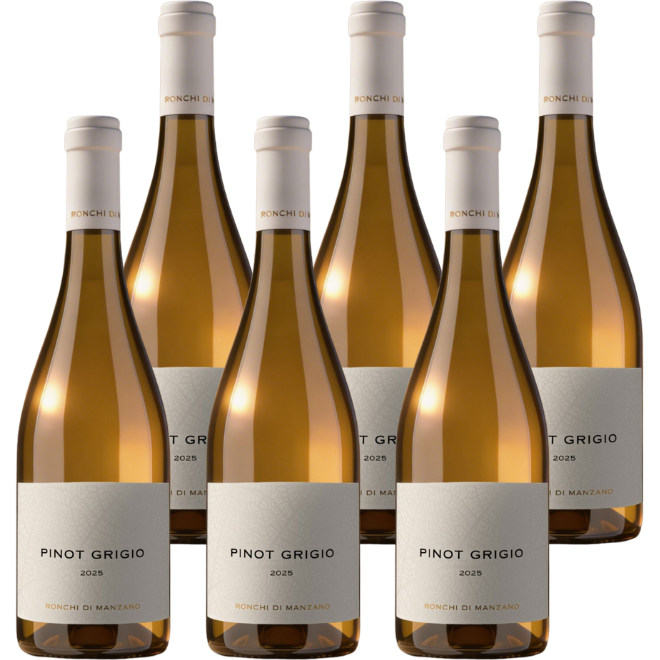
Veneto, Friuli and Trentino give the fresh, light style: pear, lemon and a crisp finish. The largest appellation is Pinot Grigio delle Venezie DOC, which covers all three regions. In the mountains of Alto Adige and Trentino it becomes more mineral, and in the Collio in Friuli fuller. View all Italian Pinot Grigio →
German Pinot Grigio: Grauburgunder
In German, Pinot Grigio is called Grauburgunder or Grauer Burgunder. The old name Ruländer refers to Johann Seger Ruland, a merchant from Speyer who spread the grape in the Pfalz, and today often signals a fuller or sweeter style. Grauburgunder is rounder and juicier than the Italian style, usually dry (trocken), sometimes oak aged. View all Grauburgunder →
Pinot Gris from Alsace
In Alsace Pinot Gris is full, ripe and spicy, with honey, dried fruit and sometimes a smoky edge. It is one of the four noble grapes for Grand Cru, and a Vendanges Tardives is sweet. Pinot Gris also grows in small amounts in the Loire and Burgundy. View all Pinot Gris →
Ramato and orange Pinot Grigio
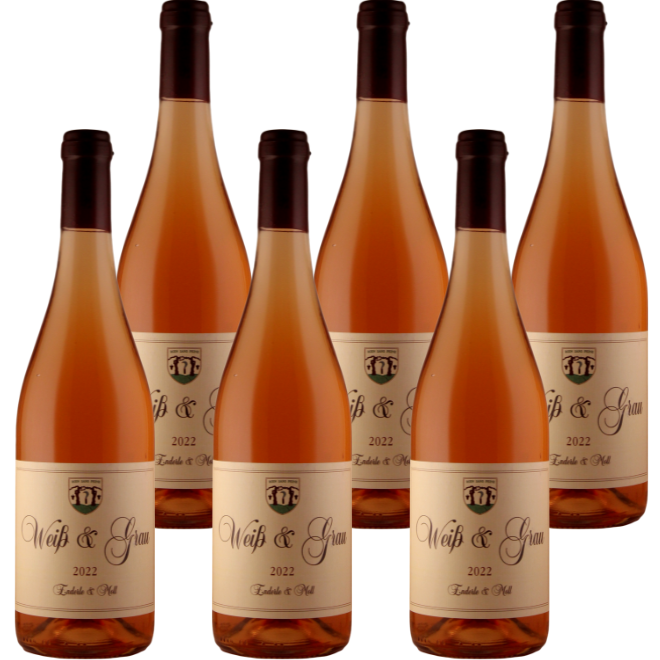
In Friuli winemakers traditionally leave the juice briefly on the greyish pink skins. That gives the wine a copper colour: ramato, the original blush Pinot Grigio. Longer skin contact makes an orange wine with more structure. Find more in orange wine. View the orange Pinot Grigio →
Where does Pinot Grigio come from?
In Italy, Veneto, Friuli and Trentino and Alto Adige are the key regions. Cembrani DOC makes Pinot Grigio in the Val di Cembra in Trentino, where altitude brings freshness.
German Pinot Grigio grows mainly in Baden and the Pfalz. Baden is the largest region, with the volcanic Kaiserstuhl at its heart: home to Bischoffinger Winzer. Weingut Enderle und Moll is also based in Baden. In France, Alsace is the home of Pinot Gris, with Domaine Gilg in Mittelbergheim. Also see all Italian white wines and German white wines.
Reading the label: price and quality
An Italian bottle often says DOC delle Venezie, Friuli, Trentino or Alto Adige; the smaller the origin, the more specific the wine. In Germany you will see trocken, sometimes with a Prädikat or a vineyard name. In Alsace look for AOC Alsace, Grand Cru or Vendanges Tardives. The big difference with a cheap supermarket bottle lies in the yield: winemakers who leave fewer grapes on the vine, pick by hand and farm mountain slopes get more flavour and texture into the glass. Grauburgunder should not be confused with Weissburgunder, or Pinot Blanc, which is leaner and more neutral.
Serving and food with Pinot Grigio
Serve light Italian Pinot Grigio at 8 to 10 degrees and a full Grauburgunder or Pinot Gris at 10 to 12 degrees. Most Pinot Grigio is best young; a Grand Cru or an oak aged Grauburgunder can age for a few years.
Fresh Pinot Grigio is lovely as an aperitif and with fish, shellfish, salads and vegetable pasta. Grauburgunder suits poultry, asparagus, risotto and creamy dishes. A full Pinot Gris from Alsace even works with duck, mushrooms, tarte flambée and Asian food.
Frequently asked questions about Pinot Grigio
What is Pinot Grigio called in German?
In German, Pinot Grigio is called Grauburgunder, or Grauer Burgunder. The old name Ruländer is still used for a fuller or sweeter style. It is the same grape as Italian Pinot Grigio and French Pinot Gris. German Grauburgunder is usually dry, rounder and juicier than the light Italian style.
Is Pinot Grigio the same as Grauburgunder?
Yes, Pinot Grigio and Grauburgunder are genetically the same grape. The name on the label often hints at the style, though: Pinot Grigio stands for the light, fresh Italian wine, Grauburgunder for the rounder German one, and Pinot Gris for the full, ripe Alsace style. Climate, yield and harvest timing make the difference.
Is Pinot Grigio a dry white wine?
Yes, Pinot Grigio is almost always a dry white wine. Italian Pinot Grigio and German Grauburgunder have little or no residual sugar. Thanks to its gentle acidity it still tastes soft and round. Only some Alsace Pinot Gris, especially a Vendanges Tardives, and the German Ruländer style are sweeter.
What is the difference between Pinot Gris and Pinot Grigio?
Pinot Gris and Pinot Grigio are the same grape; only the language and usually the style differ. Pinot Gris is the French name and stands for a full, ripe and spicy wine, especially from Alsace. Pinot Grigio is the Italian name and stands for a lighter, fresh style. Some winemakers outside Italy use the names deliberately to signal style.
Is there German Pinot Grigio?
Yes, German Pinot Grigio is called Grauburgunder and is one of the country's most important white grapes. It grows mainly in Baden, with the volcanic Kaiserstuhl, and in the Pfalz and Rheinhessen. German Grauburgunder is usually dry, rounder and fuller than the Italian style, and sometimes oak aged.
Where does Pinot Grigio originally come from?
Pinot Grigio originally comes from Burgundy in France. It is a colour mutation of Pinot Noir with a greyish pink skin, and it spread from there across Europe. Today northern Italy is the largest area, with Veneto, Friuli and Trentino, followed by Germany and Alsace.
What does ramato mean?
Ramato is Italian for copper coloured. It is a traditional style from Friuli in which Pinot Grigio juice stays on the greyish pink skins for a while. That gives the wine a coppery pink colour and a little more structure. With longer skin contact it becomes an orange wine.
What is the difference between Grauburgunder and Weissburgunder?
They are two different grapes from the same Pinot family. Weissburgunder, or Pinot Blanc, has a green skin and makes lean, delicate and fairly neutral wines. Grauburgunder has a greyish pink skin and makes fuller, spicier wines with more texture. Both are usually dry and pair well with asparagus and poultry.
What goes with Pinot Grigio?
Fresh Pinot Grigio goes with fish, shellfish, salads, vegetable pasta and as an aperitif. A rounder Grauburgunder is lovely with poultry, asparagus, risotto and creamy sauces. A full Pinot Gris from Alsace works with duck, mushrooms and Asian food. Serve at 8 to 12 degrees, depending on the style.
What does shipping cost?
You order a case of six bottles per winemaker, mixed as you like. Shipping is €8 per case and the wine comes straight from the winemaker to you.


 Fresh
 Alto Adige
 Grauburgunder
 Pinot Gris